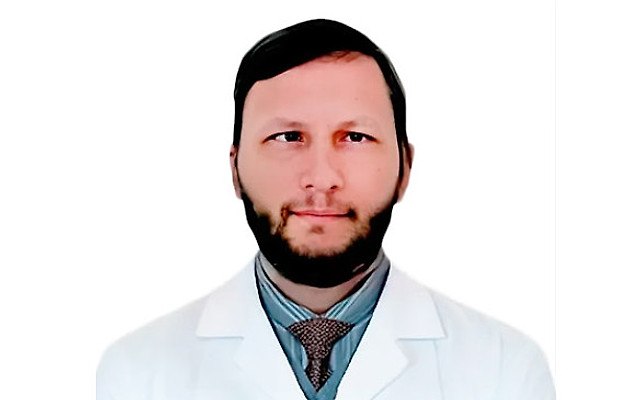
A neurologist from St. Petersburg, Mikhail Fetisov, has spent nearly six months in pre-trial detention after publicly commenting on what appears to be a case of torture inflicted on a Ukrainian prisoner of war. His case highlights the growing risks faced by Russian professionals who speak out against the war or attempt to document alleged war crimes.
Fetisov is currently being held in the “Kresty-2” detention center. Russian authorities have opened a criminal case against him under articles related to the “public dissemination of knowingly false information” about the Russian army, as well as “public calls for activities against state security.” These charges have been widely used since the start of Russia’s full-scale invasion of Ukraine to silence dissent.
Under the pseudonym Mikhail Akvilin, Fetisov used his social media platforms to criticize the invasion and share reports about the war. His online activity ceased in mid-October 2025, around the time he was detained.
According to Russian trauma surgeon Andrei Volna, who has treated Ukrainian soldiers, Fetisov had already come under pressure from law enforcement earlier. In autumn 2024, he was reportedly forced to resign from his position at the St. George City Hospital in St. Petersburg, where he had worked for more than ten years. The increased scrutiny was linked to his anti-war statements.
The episode that may have drawn particular attention to Fetisov occurred in June 2025. Shortly after Ukrainian serviceman Andrii Pereverzev was released from Russian captivity, photographs revealed that the words “Glory to Russia” and the letter Z — a symbol associated with Russia’s military campaign — had been burned into his abdomen.
Fetisov publicly analyzed the injuries, stating that such markings could not have been inflicted randomly or in field conditions. According to him, the procedure was highly likely performed while the victim was under general anesthesia and lying on his back. He suggested that an electrocautery device — a surgical instrument used to stop bleeding — had been used, pointing to the probable involvement of a medical professional.
“I am 99.9% certain that this crime was committed by a surgeon during an operation,” Fetisov wrote at the time.
His conclusions were later echoed by Pereverzev himself, who described the circumstances of his abuse. An investigation by the Ukrainian Radio Liberty project “Schemes” also identified the medical facility where the operation allegedly took place and named Russian surgeons who could have been involved.
Despite this, it remains unclear whether Fetisov’s prosecution is directly linked to his comments on the case. Russian courts have repeatedly extended his detention. In December 2025, a district court in St. Petersburg approved the investigators’ request to prolong his custody, and in February 2026, a higher court rejected his appeal.
Human rights organizations have taken note of the case. The independent initiative “Support for Political Prisoners. Memorial” has recorded Fetisov’s prosecution but reports that even basic details — such as the identity of his defense lawyer — remain unknown. According to sources, his family lacks the financial means to hire an independent attorney, raising further concerns about the fairness of the proceedings.
Relatives of the doctor have declined to comment publicly on his case, while the united press service of St. Petersburg courts has not responded to media inquiries.
Fetisov’s case reflects a broader pattern inside Russia, where professionals — including doctors, teachers, and journalists — face criminal prosecution for expressing anti-war views or contradicting official narratives. It also raises troubling questions about accountability for alleged abuses against Ukrainian prisoners of war and the role that medical personnel may play in such violations.