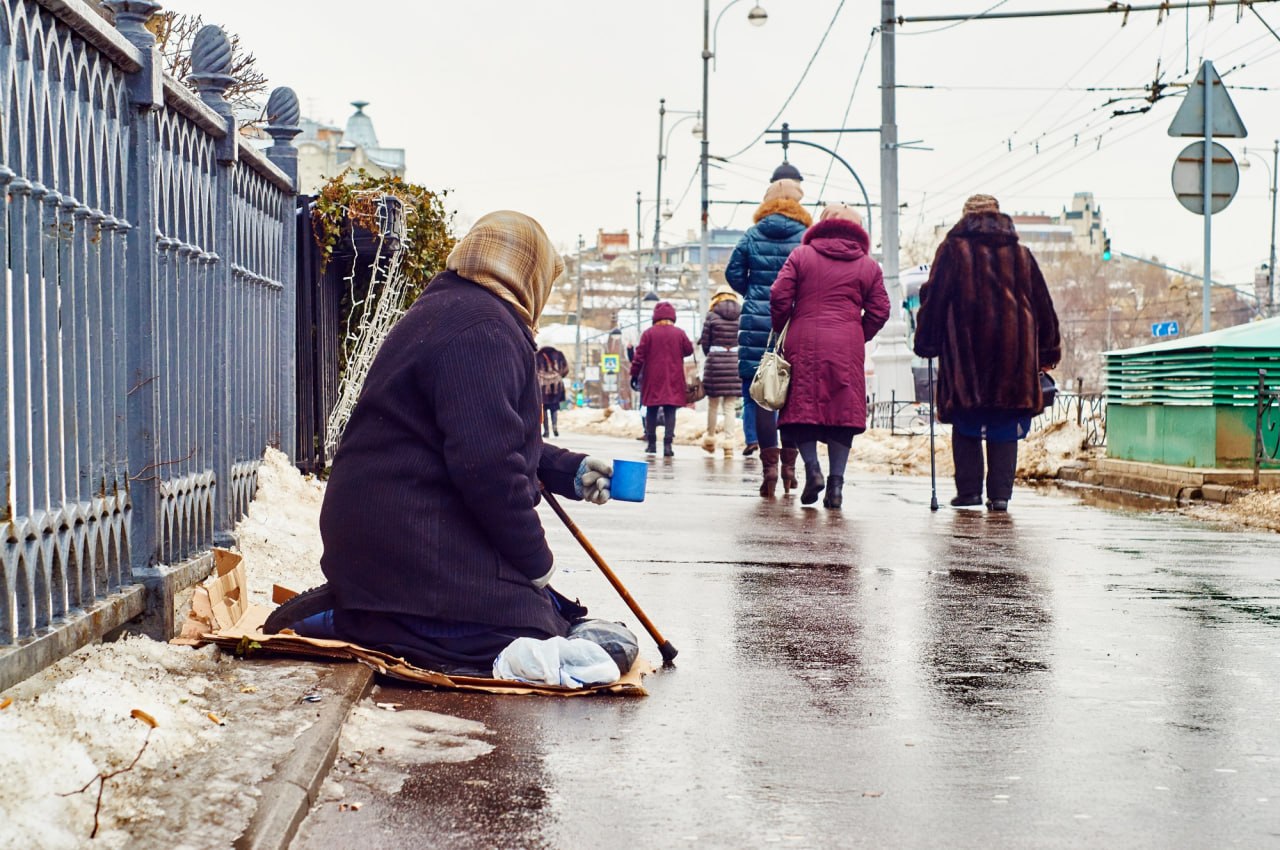
Rosstat (Russia’s state statistics agency) claims that poverty in Russia continues to decline. Last year, the number of people with incomes below the poverty line fell below 10 million for the first time, to 9.8 million. Their share of the population, according to the official data, fell from 7.1% to 6.7%.
But that statistic rests on a poverty threshold that looks absurdly low: 16,903 roubles per month (about €180), or 202,800 roubles per year (about €2,165). Rosstat still calculates that line on the basis of the subsistence minimum from the fourth quarter of 2020 and then merely indexes it to inflation, even though inflation for poorer households is generally higher than the average. As a result, the official methodology likely understates the real scale of poverty.
Even so, one striking fact remains: the money Russia spent directly on the war last year was several times greater than the combined incomes of everyone who, even by that lowered standard, is counted as living below the poverty line.
Late last year, Defence Minister Andrei Belousov said at a meeting of the Defence Ministry board that the ministry’s expenditure amounted to 7.3% of GDP. Of that, 2.2% of GDP was, in his words, “not directly connected with the conduct of combat operations”, meaning that the part of the military budget “directly connected with the special military operation” amounted to 5.1% of GDP.
Rosstat estimates Russia’s GDP last year at 213.5 trillion roubles (about €2.28 trillion). That means 10.9 trillion roubles (about €116.3 billion) were spent directly on the war.
By contrast, the combined incomes of all 9.8 million people who, according to Rosstat’s own calculation, live below the poverty line amount to less than 2 trillion roubles (less than about €21.3 billion). In other words, less than one fifth of what Russia spent directly on the war last year would have been enough to lift all of them, at least formally, above the official poverty threshold.