Vladimir Putin is once again trying to sell the world an old performance: Russia is supposedly on the brink of a new strategic triumph, its missiles are unstoppable, the West should be afraid, and any further support for Ukraine could lead to nuclear catastrophe. The names of the weapons change — Sarmat, Oreshnik, Poseidon, Burevestnik, Bulava — but the mechanism remains the same. When there are no real victories, the Kremlin replaces them with nuclear marketing.
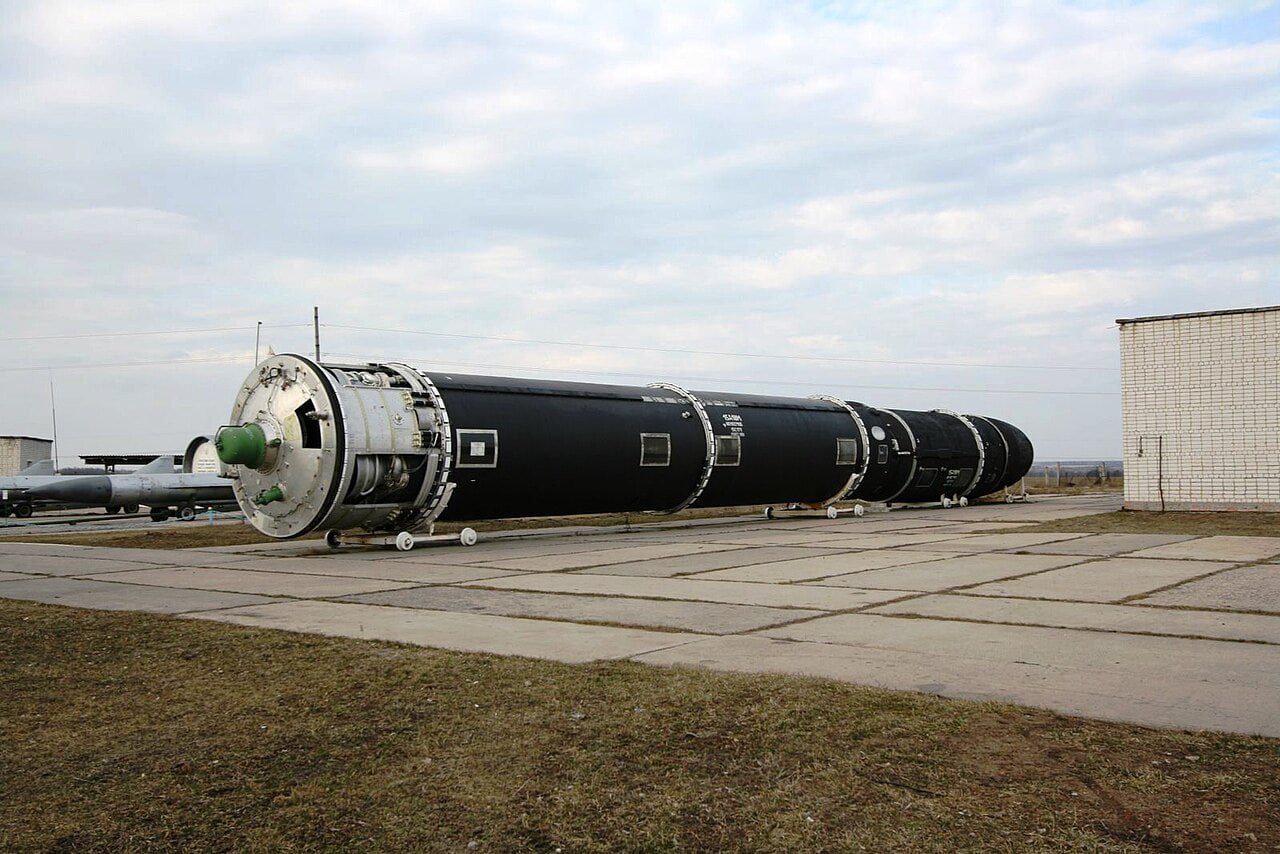
The latest story about the “successful” test of the Sarmat intercontinental missile shows very clearly how this mechanism works. The public was shown the missile lifting off and a solemn report to Putin that the launch had been successful. But with a strategic missile, the most important question is not whether it left the ground. What matters is whether it completed its full trajectory, whether the warheads reached the designated area, and whether the system confirmed its ability to carry out a combat mission.
There was silence on that. And such silence says a great deal. When a test is truly successful, the military boasts of the full result: the tasks were completed, flight characteristics were confirmed, targets were hit. Here, the emphasis was placed on the act of launch itself. The Kremlin showed the beginning and concealed what was decisive.
Sarmat is especially important to Putin because it is meant to replace the old Soviet heavy missiles that formed the basis of Russia’s nuclear deterrent. The problem is that a large part of the Soviet missile school was tied to Ukraine, especially to Dnipropetrovsk, the Yuzhnoye design bureau and the Yuzhmash plant. After 2014, those links were severed. Russia was left with the ambition to build its own large strategic system, but without part of the knowledge, people and industrial base on which Soviet missile power had rested.
That is why Sarmat has been announced, promised and postponed for years. Since 2018, Putin has been showing animations of a new miracle weapon. The deadlines for putting the missile on combat duty keep being pushed back. Each time, the message is that everything is almost ready. Each time, it turns out that it is not.
The same applies to Oreshnik, Poseidon, Burevestnik and Bulava. This does not mean that Russia has no nuclear weapons. It does, and that is a serious fact. But there is an enormous difference between possessing an arsenal and being ready to use it in the war against Ukraine.
A nuclear strike would not bring Putin victory. It would not occupy cities, feed the army, restore the economy, stop Ukrainian drones or remove the political cost of the war. Instead, it would push Russia into even deeper isolation and provoke a response that could threaten the regime’s very survival. China and India do not want nuclear chaos because of Putin’s war either.
That is why nuclear threats are first and foremost a weapon of fear. Their purpose is to halt the resolve of others. Putin wants the world to believe that he is ready for anything. In reality, his rule is based on survival, not suicide.