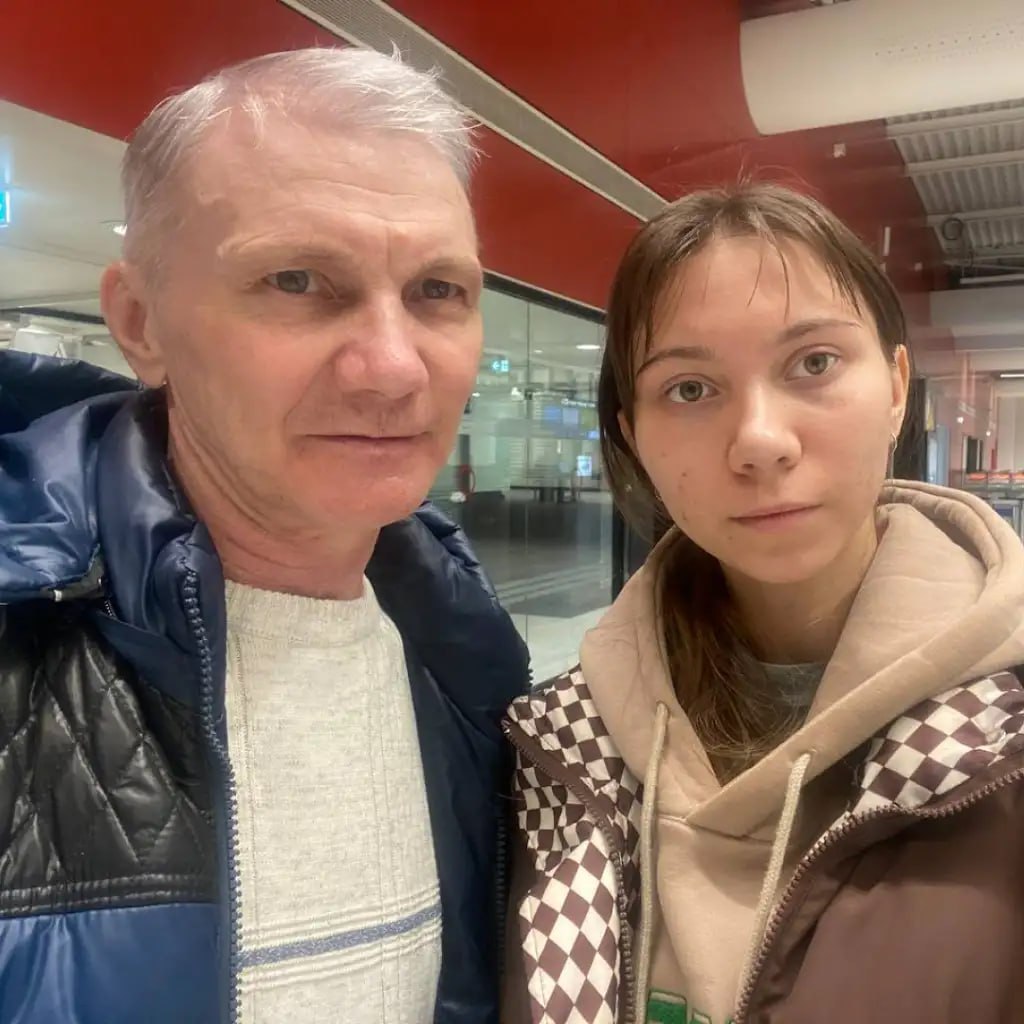
After years of persecution in Russia, Aleksey Moskalev and his daughter Masha arrived in Paris on humanitarian visas issued by France. For a family whose name became a symbol of repression against opponents of the war against Ukraine, this move means far more than a simple relocation: for the first time in a long while, they now have a chance to live without constant fear of police pressure, new charges, and state harassment.
The Moskalevs’ story drew widespread attention back in 2022, when Masha, then a sixth-grade schoolgirl, made an anti-war drawing in class bearing the slogans “No to war” and “Glory to Ukraine.” After a denunciation from the school, the Russian authorities did not stop at putting pressure on the child. Her father, Aleksey, was prosecuted for “discrediting the army” and later sentenced to two years in a penal colony. Masha was meanwhile separated from him, first sent to a state facility and then placed in the care of her mother, with whom she had not previously lived.
After his release from prison, Aleksey managed to reunite with his daughter, and the two moved to Armenia. But even there, the pressure did not stop. According to Aleksy, the Russian authorities tried to find out where they were living, sought Masha’s phone number and new address, and took an interest in her Telegram channel, where she posted anti-war messages. There were genuine fears that she herself could face criminal charges for “discrediting the army.”
Moskalev first tried to obtain a humanitarian visa from Germany, but without success. As he told DW, after months of waiting, the family decided at the beginning of 2026 to turn to France instead. The response came quickly: they filed their application in late January, were called to the French embassy in Armenia on 25 February, received their visas on 10 March, and flew to Paris the very next day.
In an interview after arriving, Aleksey said that until the very last moment he was not sure they would be able to leave the third country where they had spent more than a year waiting for a decision. What worried him most was the possibility that repression might extend to Masha as well. France has therefore become not only a place of refuge for them, but perhaps their last real chance to start over.
They now face new challenges: adapting to a new country, returning to school, learning the language, and rebuilding an ordinary life. Masha, who has been studying mostly on her own and remotely for more than a year, says she misses school, classmates, and the routines of everyday life. In Paris, that may finally become possible again.